Fork or not, they obviously integrated almost everything from the upstream. Keeping a long-running fork that's increasingly diverging is not a simple task.
Does Brave have the man-power to sustain their fork if it diverges sufficiently that they can no longer integrate upstream changes?
EDIT: My broader point being, Brave's mission is less compatible with Google's and as such it's unfortunate they aren't basing Brave on Gecko.
I know the whole history with Brendan Eich and Mozilla, as well as the problems with extending and embedding Gecko. Still, seems like an unfortunate outcome
Most of the divergences are already compile flags or command line flags on upstream. They are just disabling it by default. Is not a Brave-only thing, but different browsers have different settings disabled, the community that compiles the browser from source also pushes those features to be conditionally added. Eg. Debian, Arch or other distros, could have WEI disabled on their chromium distribution, forks like Edge and Vivaldi could disable GAIA, etc.
Just give a look at the divergence issues and the PRs solving them [1], most of them are just single file or small changes to compilation/default flags
It's far more work to do what they currently do which is nitpick the things they don't like to remove/disable/replace them.
Increasing divergence is a benefit for them here, but the main concern with chromium forks isn't the effort required it's the lack of coherent vision. Except for maybe Arc, but that's closed source, the rest of them feel like chrome but dirtier. Giant bing buttons, crypto wallets, new tab ads, it's absurd how much of them are willing to sacrifice the user experience. To the point where I can understand why a user would just stick with chrome despite what they're doing.
Can they implement some new web standard in a shifted away codebase? Or fix a zero day?
You seem to vastly underestimate the complexity of a browser engine. Just letting it stay afloat is a huge task in itself — remember, Microsoft itself decided against doing so. They can maintain a soft fork, but from a much smaller company, it is not a trivial feat at all.
They are handling "fine" because they only do low complexity changes.
I remember that people asked, some years ago, to Brave team add add-ons in their Android reskin and they, after some time, rejected because they said that what Kiwi Browser were doing was too complex for them because it required too many patches.
They were not even able to modify Mv3, they just said that they already added an adblock.
Brave and Vivaldi are mere reskins, and they don't do anything more than Ungoogled Chromium do, but adding their own bloat.
What exactly do you mean by "modify Mv3"? Brave committed to continuing support for Mv2 [1]. Adding native adblocking capabilities is also definitely a more complex change than just bundling an adblocking extension.
Brave maintains patches in a very specific way [2] to ensure maintainability. My impression is that Kiwi's patches are structured in a way that technically works but isn't easy to keep rebasing on top of upstream changes. Kiwi's been chronically outdated compared to upstream Chromium whereas Brave generally gets updated within a day of a corresponding Chromium release.
> Brave and Vivaldi are mere reskins, and they don't do anything more than Ungoogled Chromium do, but adding their own bloat.
At minimum both add an encrypted, independent sync service in lieu of Google's one. And of course a ton of useful new UI customizations, built in adblockers and other mere reskin stuff. I, too, hear "built-in adblocker written in Rust" and think "reskin".
I can tell by this line that you're biased against Brave because you wouldn't have said this if you had you know, even read the title of this discussion, let alone clicked the link and read the tweet.
> They are handling "fine" because they only do low complexity changes.
You realize the author of the tweet, who is the CEO of Brave is Brendan Eich, inventor of JavaScript and one of the main developers for Netscape Browser (arguably one of the reasons we have the web today), co-founder and former CEO of Mozilla... I'm sure maintaining a fork of Chromium is not a massive undertaking for them.
They seem to be throwing decent resources at this as well. If you you click on "+500 code churn" in the contributors chart at https://devboard.gitsense.com/brave?repos=brave-browser,brav... for brave-browser and brave-core, you can see there is a decent number of contributors. I would say there are probably 30+ full time employees working on this. And if you look at the merged pull requests, at https://reviews.gitsense.com/insights/github?q=merged%3Atrue... you can see many contributors are 1 year+ contributors (look at the gift icon for this information)
What's the point of basing it on Chromium when Chrome exists?
Brave seems intent on actively trying to sabotage the Google ad distribution business model and inject their own ad distribution system. It's kind of weird to base their browser on the browser maintained by an entity with objectives that are at such odds with their own.
Because it selectively merges only patches which don't affect privacy, security, questionable standards, and adds new features.
Honestly I don't know why you're even asking this. It's literally the whole thread is about this: it's not a reskin, it's a fork.
Is it "kind of weird" that it's at odds with Chrome's goals? No. Because if it wasn't at odds, it wouldn't exist, these people would be just Chrome/Chromium contributors.
Chromium is open-source because they forked WebKit, and WebKit forked KHTML. Google were at odds with Apple when they forked WebKit to Blink, but the FOSS license allowed it. And lo and behold it has allowed it again. What's surprising here?
The point is to have Blink without the burden of Google's commercial interests. Firefox is already Gecko without the burden of Google's commercial interests (well, almost).
Not sure why is everyone trying to sell Gecko here. Isn't Mozilla a good custodian to Gecko? Clearly if I take your opinion at face value, no. But why? Google is clearly not a good custodian for the most popular browser, their private interests are all over it. But the core engine is good.
Your's is an interesting angle that I hadn't thought of. I think the counter to it would be: Brave inadvertently helps Google, by improving Chromium, and it would be better if they inadvertently helped Mozilla, by improving Gecko. Building a browser engine is a big undertaking and I think most people would agree that more time and energy being invested in Gecko would be a good thing.
Brave also inadvertently helps Google by contributing to the overall stats of Blink users and decreasing Firefox's visible marketshare. Firefox's shrinking marketshare marks it for "death" in a lot of little papercut ways. More users using Gecko would send more messages to web developers investing in which markets to pursue.
But what would be the point? For me Brave is essentially Firefox-level privacy with Chrome-level compatibility, performance and reliability. A Gecko-based Brave would be just Firefox with a few UI changes and maybe somewhat fewer compatibility issues until Google gets around to creating harder ones.
> Because it selectively merges only patches which...
This is probably pedantic, but I think the way they actually work is that they integrate all upstream changes, and then disable any behavior they don't want to support? Which means they can minimize their overall divergence, which is what you want for maintainability.
It is clearly not a fork. They follow upstream Chromium and then apply patches, as explained here: https://github.com/brave/brave-browser#update-brave. A fork diverges from a point and then doesn't rebase upstream after that. Eich is lying.
There's both privacy and user experience improvements that a fork could enable. If I had any hope that I could keep it up to speed with mainline Firefox, I'd fork Firefox myself if only to roll the numerous userchrome changes I make to my installs into the browser itself, as well as to make some changes that aren't possible with userchrome customization alone.
Intentions matter. HTML is a presentation layer at this point. No one "programs" in HTML in as much as they have to, if they do it at all (delegating it to their favorite framework to generate most of it). Most of programming for the web is done in Javascript. I like quips as much as the next guy or gal, but it feels like people are being intentionally obtuse in this instance.
Maybe "Also the creator of JavaScript" is a tongue-in-cheek contention with assuming that JavaScript and "the world's most popular language" are one and the same.
Popular itself is a squirrelly word here. Popular can simply refer to as "most used" (by this metric, Xi and Modi would be the world's most popular leaders, since they lead the world's biggest populations), or it could be "most liked" by some other measure (I have no analogous leader to nominate here).
A better analogy would be "man who invented much about modern walls, invented JavaMortar, and has built infrastructure around maintaining the open source wall in question, can maintain wall he's been maintaining."
I never tried Brave, but they lost all credibility when they injected their own affiliate links in Coinbase URLs. I like that they use their own index in their search engine, but I will never use it, better alternatives exist and my trust is easy to lose and almost impossible to regain.
I'm really grateful to Brave and Brave search for the alternatives they provide. Firefox is still my main browser, but Brave is an easy, reliable option when I come across a (thankfully increasingly rarer) website that refuses to work on Firefox (and happens to be an essential website in some way).
I would use it a lot more if it was better about coping with low memory (4 GB) systems. This is possibly something they inherited from Chromium, but Brave is very memory hungry compared to Firefox, and is much quicker to slow down when there's 10+ tabs - Firefox on the same computer is able to cope much more easily with multiples of that. It's like using an old school Windows system, Brave has to be restarted periodically or it slows down dramatically, and starts responding erratically to UI interactions. I can have multiple Firefox profiles open, and a Librefox instance on the side too, and they all work fine; as soon as Brave is open, there's a tangible difference in the performance, of both the browser itself and the system as a whole.
I'm shocked at folks' willingness to use a browser that has a history of tampering with a user's URL input (among other shenanigans). See https://news.ycombinator.com/item?id=23442027&p=2 for more.
That's the bare minimum a browser is expected to do. Not touch my URLs.
- The PR is on GitHub, this isn't a closed source browser.
- The bug appeared when Brave was like a few months old.
- The URLs that were being overwritten were only a few crypto exchange websites that partnered with Brave. The affiliate URL was supposed to be a suggestion but the bug made it overwrite the URL.
- The affiliate program was shutdown right after the PR was merged.
- Nothing of that sort happened again.
- Even the CEO apologized for an issue that was blown way out of proportions.
> The URLs that were being overwritten were only a few crypto exchange websites that partnered with Brave. The affiliate URL was supposed to be a suggestion but the bug made it overwrite the URL.
I'm sure the outcry from folks who recognized this was happening did not have anything to do with the affiliate program being canned and this 'bug' being patched ASAP. It's quite an egregious thing for a browser to screw up. That kind of trust can't be bought back by saying "Nothing of that sort happened again", because now that statement is permanently "Nothing of that sort happened again...yet" because that trust is gone.
If this issue wasn't "blown way out of proportions", one can only theorize how how long this bug would have stayed. The way I see it, the CEO apologizing is basically an apology that they got caught with their hand in the cookie jar.
and yet everybody seems fine with advertisements in the address bar on Firefox, Chrome, Edge and other browsers.
Brave is the only mainstream browser right now that is not serving ads in the address bar. So before anybody has a problem with a bug that was fixed a couple of years back, they should be talking about their favorite bug-free browser.
I am not here to engage in whataboutisms. This was my critique on Brave, not my critique on every other browser. Do you work for Brave? Otherwise, I am unsure why you are being this defensive.
Thats the joke, they changed the browser to harm the user and help the business. You and them have the gumption to act like wei isnt the same thing they've been shipping.
Opt in setting doesn't mean much here. While it's technically true the crypto stuff isn't "enabled", it's constantly pushed to you with no option to remove all of that during installation.
I'll walk you through it:
Upon loading the browser on a fresh install, you are greeted with a new tab page pushing Brave Rewards. With manipulative UX, there is no button to disagree or remove the feature, only a button for "start using rewards". You can hide it by clicking the 3 dots, which for most users they're never going to do unfortunately.
Looking at the address bar, there's a triangle up there with a badge. Hiding the new tab Rewards card doesn't hide this triangle. Clicking on this does not show a remove feature option. Beside that, there's a sidebar button and a wallet icon again with a badge. Clicking on this only shows a learn more button. I can right click both of these, and finally see a hide option.
Finally all of that is hidden. Maybe I browse a page or so, and then open a new tab. I'm shown an ad on the new tab screen. Right clicking it shows no hide button. So I'll try the customize button. Here's where you have to scroll down and disable the "show sponsored images" option.
All done, right? Ok let's browse Reddit for a bit. There's where you see the "tip" button under every post. Right clicking shows nothing about hiding it. So into the settings you have to go to finally remove the last bit of the feature and be prompted to relaunch the browser.
The crypto related settings are also literally the only settings that don't sync across devices, and you have to manually turn it off on every new installation, I wonder why that is.
Is it less scummy than firefox? More importantly, is it less scummy than continuing to give Google control over the internet through the blink browser engine?
The only actual counterbalance to google's power in web is the firefox browser and it's basically dead because "wah wah they bought pocket wah wah there are two tiles on the new tab page that show popular websites wah wah" so alright I guess we will just do the whole IE6 debacle again this time with less willingness from regulators to fix our bullshit.
I don’t recall any of that but it’s been a long time since I set up Brave. Anytime I install a new browser the first thing I do is go through all the settings and configure it, so I probably turned all that off on day 1.
I disabled all the nonsense for a new profile just now, didn't take much. I know what bits annoy me, though. But one pass right clicking annoying UI elements, one pass through new tab page's Customize menu, one pass through Appearance in settings and you're done.
My feeling on the matter that nothing is free and every time a team like this spends their resources on some extra bauble, they are drifting from the core goal. Like Mozilla.
Vivaldi is an excellent browser, but it sometimes seems like it has too many options. For example, tab groups and tab workspaces are almost the exact same idea.
Arc is basically someone looking at Vivaldi and hitting it with the "design stick". I didn't anticipate I'd love it as much as I do. Since it's Mac-only I only use it on my work machine, but that's 80% of my browsing anyway and I have no desire to sync my work shit anywhere else.
I know I'll probably get used to it, but I don't like how it shifts my content off-center. But I'm one of those weird one-maximized-window-at-a-time types.
I don't know if I'd say it's weird, but I'm not sure I get the appeal other than for trying to hyperfocus (and with similar downsides that implies, e.g. very expensive context switching).
I like the desktop metaphor that computers adopted, and one way to use it is to think of different application windows as different paper documents on your meatspace desktop. You could have a rule that only 1 piece of paper is on your desktop at any time, but I find it much easier and more efficient to work with, as needed, two or more pieces of paper on my desktop. When multiple pieces of paper are on my desktop, I can arrange them such that I can easily focus on different papers by only moving my eyes, or, if the papers are relatively far apart, by moving my head and/or the rest of my body a little too.
I personally like the desk organization rule of "1 project/task per desk", i.e. you clear your desk when switching tasks to ensure only relevant things are on your desk / within your visual domain. I use computers to similar effect with different desktops/workspaces.
I don't think Vivaldi is open source. But if Brave's features are so bad that you're willing to switch to an closed source browser, why not switch to Firefox?
So when I'm using OpenBSD, I use Firefox exclusively. On my Mac, I use Safari 99% of the time, but I do have Firefox installed and use it for some things, but when I need a Chromium-based browser, I use Vivaldi, instead of Chrome or Brave.
The ignorance so stale. Learn more about Crypto. Learn more about BAT, and its integration into Brave. Your argument is so 2018. We're in 2023 now. Update your knowledge.
What specifically isn't true about that? When I used Brave the ads appeared as push notifications over the website you are currently viewing, and you were rewarded BAT for tolerating it. AFAIK the ad notifications aren't at all related to the website you are currently viewing, and the website isn't compensated.
> I'm talking about getting paid in BAT coin for looking at ads they hijack on other peoples websites.
That's not how it works though. Brave blocks ads by default, but it doesn't insert ads on any websites. It has some separate ads you can enable to get paid, but they are either on the browser start page or in system notifications.
They don't put ads on websites, they do optional system-notifications ads and ads on default new tab window. It's very unobtrusive, and you can just opt out of claiming your rewards or pass them onto the sites you browse.
Initially, I held the opinion that Apple's mandate regarding browsers on iOS/iPadOS, wherein they function as mere skins atop the Safari web viewer, constituted an anti-competitive measure. However, presently, it has emerged as one of the few non-Chromium browsers with a substantial user base, necessitating web developers to accommodate its requirements. As a fellow web developer, I find myself utilizing Safari for personal browsing while resorting to Chrome for development purposes due to far superior developer tools.
It's good that Google has some non-marginal opposition, but in this case you don't gain computing freedom, you only only choose your master. Apple loves having tight control over their devices.
Totally personal preference, but not a fan of the Brave UI. At least from my perspective they (like Vivaldi and Edge) are trying too hard to distinguish themselves from the outward look and feel of Chromium. It's their right as a fork, and that of whoever finds it works for them. I'm not even bothered by (or much notice) the built-in crypto-based gamification. I just wish someone would do a minimalist fork of Chromium, maybe with a rudimentary sync service.
The gamification is a pretty out of date hot take now. They still have that crypto stuff, but they pivoted about a year ago to try to sell the built in VPN and get more value out of their search engine to raise revenue instead.
The best part is that right click is all it takes to hide the VPN and other stuff from the UI. I usually do it first thing after I install Brave and never see it again.
Honestly Firefox is way worse than brave in terms of intrusive stuff.
When Firefox updates I get full screen ads for their VPN and whatnot. Brave has never done anything like that to me. Hide the features you don’t want once, never see them again.
Yea I found there were a lot more FF config settings to disable as well.
These threads always unfold the same way tho. Brave gets lambasted by some, the people that enjoy using Brave end up being “well actually” guys etc etc.
And I use both Brave and FF in addition to occasional librewolf they’re all useful
My only real issues with Brave is 1)that when you have too many tabs open it starts stacking them elsewhere... and two, when I open settings they are terrible and I have to search Password manually to find saved passwords, but the way their UI works it first loads the password module and when I go to click it it loads something else and moves it around, it is annoying.
I switched to Brave last year after 22 years of Phoenix/Firebird/Firefox.
This was purely for Chromium performance reasons (although it seems Firefox has made some major improvements recently). I didn't like leaving behind a unique browser engine, which needs to remain a significant player.
I don't understand a lot of the hate for Brave. If you don't like the crypto integration, the ads, etc you can just disable them. I feel the original intent, to be able to contribute directly back to page authors, was a noble one. It may not have played out as intended, but it wasn't a scam.
One year in, I've had no issues I can think of. And now they have their own search engine, another net plus to the ecosystem. Outside of things like Tor Browser, the privacy is about as good as you're going to get from a client. In fact, you can open a new window using Tor directly in the browser. I don't use their VPN but that's available also (Mullvad?).
I spend enough daily time in it that I would notice UI/UX/perf. problems ... I really haven't seen any.
>I don't understand a lot of the hate for Brave. If you don't like the crypto integration, the ads, etc...
...and the redirection of the URLs of other cryptocurrency exchange websites...and the time it inserted affiliate referral codes when users navigate to Binance. Yes, you can turn off the crypto BS, and they stopped doing the redirects. But I can't trust a browser company that _may_ do such shenanigans again in the future. They "fixed" or removed that stuff, but that doesn't mean they won't do it again. I just don't trust them, at all. That right there is enough to not use the browser. Not to mention Brendan Eich and his views.
If you still don't understand, then I don't know what to tell you.
It's funny, when Brave the organization's politics are pretty narrow and what you'd want out of a browser: Privacy and user control.
Meanwhile Mozilla the organization boots people for politics, wants "more than deplatforming" and uses as one of their examples organizations deciding what I should see on the Internet - preferring outlets that Mozilla themselves like, naturally. They publish stuff with the gist of "did you encounter other politics on YouTube, how scary".
Meanwhile the organization spends money on getting a sneaker designer to make time-limited color themes for their browser and writes a pile of copy about how cool it is that a sneaker designer painted the browser blue.
Meanwhile, Brave releases a user-customizable filtering function for their search engine so you, not someone else, can decide from what POV you see the Internet and added native vertical tabs to the browser.
One organization is blatantly political, the other just makes a good browser.
But if you want people you like to decide what I see (at least easily) on the 'net, that's good, I guess.
I'm not going to defend mozilla, since I think deciding which organization we hate more is counterproductive. But I will say that as a user of a browser, I don't really care that much what anyone publishes or who they boot from their organization (sounds flippant I know but at the end of the day I just want a browser that works). Brave putting garbage in their browser like crypto mining and redirecting links affects _the product_, which is the only thing I care about. Firefox has made blunders, but nothing like this.
Which is why they were silently filling in affiliate links without user consent right? Or why they were collecting tips for users with no affiliation to the company that runs brave.
Or that using a single wallet built into your web browser for crypto stuff nicely ties all your transactions to that one wallet in a way that completely removes all "privacy" aspects
I would be fine with it if it were opt-in for users who want to support the browser in that way, but silently injecting them across the board is just a scummy thing to do and also likely a violation of any sane affiliate program's terms. A company that's willing to do that loses an unrecoverable amount of credibility and trust in my eyes.
I am with you. Their past actions irreversibly tainted their reputation, and they are no longer worthy of our trust.
I think society has largely adopted a victim
mentality with abusive software these days. We are so used to being betrayed and hurt that we now accept it as normal. It started off innocuously enough, but now we are effectively being hurt on the regular. We have learned helplessness, and that will not end well.
> We are so used to being betrayed and hurt that we now accept it as normal. It started off innocuously enough, but now we are effectively being hurt on the regular. We have learned helplessness, and that will not end well.
> Their past actions irreversibly tainted their reputation, and they are no longer worthy of our trust.
This is closer to something you might hear from someone with a victim mentality. I wouldn't go so far as to say that this is evidence of such, but certainly this rigidity of thought around being a victim to another's actions contributes to such.
It's more that we are so absurdly petty, pathetic, and entitled that we refuse a tiny, minuscule amount of pain for the greater good. Maybe back in 2010 the difference in speed between the browsers mattered but I've used Firefox since version two and as long as you had an ad blocker the speed was NEVER an issue.
So now we've given a hostile ad agency control of the internet to save 100ms on certain web site loads. Good job everyone.
They absolutely do, and using the chromium code base, regardless of what you supposedly patch into or out of it, pushes forwards GOOGLE'S goals, not the open web's goals.
> I feel the original intent, to be able to contribute directly back to page authors, was a noble one. It may not have played out as intended, but it wasn't a scam.
The original intent was absolutely a scam. They wanted to hide the ads that were already on websites, replace them with their own, then give a fraction of the revenue they just effectively stole from those websites back to them (but only if they knew to ask for it).
Also they were going to take over all the third-party tracking data for their own, while branding it as “privacy” — so much hand waving about "we don't run a MiTM proxy" (while hoping we didn’t notice it’s because they don’t need to be in the middle when they control the browser itself).
Absolutely brazen, and they kept changing their story in real time whenever people started to notice hey wtf is this. Happened to be able to find this in my posting history for example; in hindsight I wish I hadn't been so cowed by the fact that I was arguing with Brendan Eich Himself, because man what a load of horsepuckey he and his guy were delivering: https://news.ycombinator.com/item?id=14464518#14465271
The parts that could most safely be described as "scam", to my point of view, are
* lying to users about protecting their privacy, while gathering and reselling more information than was possible with existing 3rd party trackers
* lying about "giving back to publishers", while actually coopting those publishers' revenue streams
Your "Websites are not entitled to showing ads" statement gave me a moment of thought, I have to admit: I don't see anything wrong with ad blockers, but I do think the ethics of ad replacers is pretty problematic. At best it makes Brave a parasitic entity feeding off revenue that would have otherwise gone to the content creators.
I'll reluctantly agree that that part on its own doesn't rise to the level of "scam" but I certainly don't think it's admirable.
I think letting an advertising company have any control over content distribution or display is inherently a problem, so Brave signalling that they want to do advertising is pretty clear to me that they cannot be trusted.
Like, do Brave think google is just evil and that if someone else becomes the advertising behemoth things will be just rosy?
For sure. And their overall shiftiness whenever anyone calls attention to their plans ("oh, that FAQ's out of date," "oh that's a future feature," "oh that's not what we planned, even though it's exactly what we said," etc) doesn't exactly help make them seem like a trustworthy partner.
> I don't understand a lot of the hate for Brave. If you don't like the crypto integration, the ads, etc you can just disable them. I feel the original intent, to be able to contribute directly back to page authors, was a noble one. It may not have played out as intended, but it wasn't a scam.
The presence of ads and/or crypto is a strong signal that you're working with an untrustworthy entity, whose objectives will not be aligned with your own.
Maybe Brave the browser isn't outright a "scam," but the willingness of the company to dip into scam-enabling technologies like crypto makes the brand toxic, and anything by the company is immediately suspect.
The same is true for Signal, for what it's worth, as it still supports Moxie's pet shitcoin.
It's easy enough to opt out of Brave because Firefox exists, but there's still sadly no better alternative to Signal.
> The presence of ads and/or crypto is a strong signal that you're working with an untrustworthy entity, whose objectives will not be aligned with your own.
Decentralized wealth is crypto. Sure, there are scams, but the point is to pay people for viewing ads (wealth re-distribution in a decentralized fashion). No one else is paying you to view ads; they are just taking your engagement data, your face and eye gaze data, your mouse trajectory data, etc. Brave is the first to try to pay you a portion of its ads revenue in a way that you the end user can flip into whatever currency you want, including USD. I've never been cut a check from Google, Amazon, Facebook, or the like. But I've received BAT, which I can flip into ETH/BTC, and earn more money.
> Maybe Brave the browser isn't outright a "scam," but the willingness of the company to dip into scam-enabling technologies like crypto makes the brand toxic, and anything by the company is immediately suspect.
Do you use any resource owned/operated by Google? Amazon? JPMorgan Chase? Facebook? Bank of America? Wells Fargo? (to name a few) All of these companies "dip into scam-enabling technologies like crypto."
Unlike browsers, which can (for now) still be swapped out solely on individual preference, the network effects are real for messaging platforms. This means that currently Signal is more broadly useful than Matrix clients.
Hopefully this can change some day, and Matrix (or something like it) will become ubiquitous. But it was a slog for Signal to gain even its small market share, despite its better usability and lower barriers to entry.
For lack of a better alternative, we "standardized" on Signal as the de-facto secure messaging system that is outside of the control of ad companies, and it will take time to rectify that.
I certainly don't hate Brave. I use it. I also don't like Brave, I put up with it. It's just that there aren't any great browsers out there, and Brave sucks less than most.
I agree with you, but it sometimes feels like a 'great browser' is supposed to be free, bleeding-edge while also backwards compatible, tracking-free, ad-free, and somehow altruistic and for the good of the open web.
Where are we getting these absolutely unattainable ideals from? Who can possibly support and fund such a project besides an enterprise?
You should check out History Trends Unlimited! I also wanted an unlimited history and since no browser supports it, someone made an extension. It even automatically backs up your history for you in a neat litte zip file!
The text input spelling checker is really terrible; late 80s spell checks were better.
Forgot which, but had a 12 letter word that I misspelled one letter of, Brave underlined it in red with no replacements in right-click menu, I fixed it by googling the spelling and underline went away.
In often happens that it has no or even very wrong suggestions.
Personally, I don’t like the inability to turn off the update mechanism, which is annoying on my macos 10.13 computer that has a warning bar every time I run the brave browser application. I suppose this means there is telemetry built in that can’t be removed
Yeah, that's actually been irritating me a lot lately. Brave has taken to constantly nagging me about not being able to update itself. I know! That's on purpose! Stop bugging me.
The UI, mostly. But the point isn't that I'm not in love with Brave. The point is that I use it because it's the least bad option, and I wish there were an option that I would actively like.
> I feel the original intent, to be able to contribute directly back to page authors, was a noble one
The intent is to circumvent how authors have themselves chosen to monetize their own content, insert themselves as the man in the middle, display their own ads and "pay" people in a currency they print. They're actually replacing the direct compensation the author would receive with an indirect one. Traditionally this kind of scheme is known as a protection racket. Also of course this means that Brave is simply an advertisement company, like the ones they are supposed to protect you from.
When someone visits your page through Brave the ads you would have been compensated for are being blocked, Brave earns actual money for the ads they put in their place, and then users get the chance to tip you in 'attention tokens', which they wisely pre-mined. That's not noble, it's like the mafia combined with a Nigerian prince currency scam.
> That's the one and only real reason why they hate brave
Cause Mozilla did him dirty? When Obama ran in 2008 he opposed gay marriage. Hell proposition 8 passed. California's constitution still has text banning gay marriage in it.
I agree, it's a great browser and the BAT was at least an attempt to change some of the bad incentives of the modern web. Doesn't seem like it worked, but kudos for trying something new!
> I don't understand a lot of the hate for Brave. If you don't like the crypto integration, the ads, etc you can just disable them.
If you buy fruits from a shop that also sells scummy lottery tickets, you at least should accept that other people will bring criticism and skepticism to that shop.
Do you think the shop should not sell something that some people want because other people don't like it? AFAIK the BAT token hasn't done any material harm to anyone besides maybe some speculators that bought at the peak
I think that the people who don't like it might not shop at that store, and the business should take that into account.
That "should" shit, however, is inviting other people to make a value judgement just so you can attack them for not being libertarian or something, nobody cares. They should do what is best for their business if they want to be successful. They thought that was crypto, and who am I to second guess? As long as they're doing it, or strange advertising shell games, I'm not even their customer, so I don't get a say. I don't think they did anything remotely fraudulent...
How dare someone expect more from their fellow citizens than "shamelessly and with zero morals make as much money as I can through any means". What's with HNs wants so bad to be free from judgement for doing business that can hurt people.
No one complains anymore because in general states regulated that the tickets need to be behind a counter (or behind glass) and entirely unavailable to minors and a portion of sales need to go to remediation tools (addiction PSAs, addiction counseling services) and/or education funds and other taxes.
They have a new api where they’re happy to sell copyrighted website data (like mine) to third parties to train ai with (without copyright holders permission). This sort of soured me on the company. I was a fan until then
The hate for Brave is well earned. They launched with a totally scummy scheme of hiding ads on people's sites and collecting money "on their behalf" but they needed to then know to reach out to Brave to get it. They have done some not great stuff since then as well.
PSA: They held the tips for a while to see if the creator signed up, and if not sent the crypto back to the user. If it even was the user's, they put up a pool of the stuff out of their own pocket to jumpstart the tipping service and the whole thing might just be over the allocation of that pool, I don't remember the specifics.
In any case no one lost their stuff, bad UX was critiqued and bad UX was fixed.
A lot of people are leery about crypto and have read a FUD article or two about the browser and put it in the hate bucket. Next to none of the common complaints are modern missteps. One of the most common complaints was a bug that got fixed within a day of being reported, in a feature that Firefox is doing TODAY yet people aren't demanding Firefox devs' heads on a plate.
No, not FUD in terms of Brave implementing crypto things within the browser. That much is obvious and they take pride in it.
What I mean is that year in, year out you'll see the same things about a bug in their Firefox Suggest-esque feature that got fixed within one day of being reported, the bad Rewards UI which got fixed without anyone losing their cryptocurrency in response to eg. Tom Scott's feedback being treated as a scam where Brave stole it from people and so on.
They're basically criticisms of first iterations of new things and assume maximum malice on part of the Brave team. The integrating crypto into the browser side is mostly unrelated, nobody denies it and few think it's unequivocally good.
As the guy who released all those Phoenix and Firebird and Firefox versions, I can tell you with some certainty that it hasn't been 22 years yet.
First builds were spring of 2002 and you probably didn't have those because they were still called "browser" or "m/b" back then and not made terribly discoverable. You probably mean you got with it in 2003, summer or fall, which would be 20 years ago, not 22.
> As the guy who released all those Phoenix and Firebird and Firefox versions, I can tell you with some certainty that it hasn't been 22 years yet.
Yes, I was off by a year or so, I'm not making anything up. Two decades is a long time to remember details.
All I know is I'd FTP to grab the latest and unzip it into a folder.
By this point I was running a couple major websites and had a "5-star CNET Award" for an internet-centered software product so I was on top of anything in that sphere.
But how can you oppose same sex marriage unless you think same sex couples are not deserving of the same legal status as straight couples. There's no religious grounds for opposing it because marriage is a legal matter. The ceremony that many churches do that they call marriage has no legal standing, and is not generally recognized (on it's own) by the government.
Your two options to oppose gay marriage then are either believing the United States should base it's tax and property laws on specifically christian religions (plenty others have no problem with gay marriage), or that gay couples should not be "valid" in the eyes of the law.
"There's no religious grounds for opposing it because marriage is a legal matter."
No, it isn't. For some it's strictly a legal matter, for others it's both a legal matter and a religious matter. That's why you can legally marry in 5 minutes by placing a signature, and separately marry "for church".
"The ceremony that many churches do that they call marriage has no legal standing"
The distinction is irrelevant. Whether or not you consider Eich's contribution to be offensive, the inciting action was strictly related to the legal aspect.
Plus, even if this was a strictly religious belief, that doesn't protect him from the criticism of peers. That's the cost of picking people to make your enemy. Eich resigned after the reaction.
If that is the cost (cheap pile-ons to go after someone's job) would you apply the same method to any of your moslim colleagues? Or is that "different"?
Again: do you equally call for the removal of your Muslim co-workers, based on their believes, which on this matter are on average far more..."restrictive"?
You cannot participate in (or plainly accept..."tough luck") the criticism on Brendan if you're not also willing to apply the same criticism to pretty much every muslim worldwide.
When a muslim coworker donates $1000 to support overturning marriage equality, yes, I would absolutely tell them that's fucked up and if they were in a C level position I would voice an opinion that they do not uphold our company's explicit core value to be inclusive.
I absolutely do not give a fuck about what someone PRIVATELY believes. The problem is not religious people believing in something, the problem is religious people FORCING their beliefs into law.
When muslim people do that, it's called Sharia law and I am against that, same as I am against laws based on christian beliefs.
Marriage is a legal institution in the United States. If you call for discriminatory access to a legal asset, you should be ready for the scrutiny.
Had the shoe been on the other foot and we were funding a proposition to limit the recognition of Christian marriage, Christians would call it an opposition to their existence too. And rightfully so! The backlash makes sense on a logical, emotional and authoritative level. I don't see how you could possibly interpret it otherwise.
Of course it is bigoted and discriminatory. The point is that discrimination is itself a scale, and "you're not allowed to exist" is a very far end of that scale - much further than opposing same-sex marriage.
This must be in regards to his donating $1,000 to Proposition 8, which sought to ban same-sex marriage in California [0]. This was the genesis event that led to his resignation from Mozilla back in 2014.
I'm unclear if his views have changed either positively or negatively in the intervening decade.
so, he was forced out of mozilla for his private constitutionally protected political activity.
how exactly is that evidence that he believes "people don't have a right to exist?"
it seems like some people think people with his beliefs don't have a right to exist. maybe they are just projecting the hate in their own hearts onto their enemies/victims?
It's actually not protected. In fact, only very few states even have laws that protect political activity from being used for workplace terminations. And even states like NY and California make a vague exception for "political activity that interferes with the functioning of the business."
The only ones constitutionally protected are government employees since the government cannot fire someone for 1st amendment speech (but companies can because the 1st amendment does not apply to private entities)
Now you’re reacting to hyperbole with more hyperbole.
It’s more like OP just wants to use rhetoric to have you ignore and silence Brendan Eich. Which I still think is going too far, even if I disagree with his (apparent) private political views.
This comparison is beyond facile, so much so that it reads as basically a bad faith attempt to jam up the conversation with nonsense tangents.
Trying to take away someone's civil rights is fundamentally different from outlawing a crime. Wanting someone to be a literal second-class citizen is, in fact, a negation of the validity of their identity. Revoking same-sex marriage is absolutely an effort to push the LGBTQ+ community back into the shadows; it is transparently the tip of the spear of a movement that seeks to roll back some of the biggest civil rights gains of the last few decades. That is what OP means when they say "don't want me to exist".
No. It isn't fundamentally different. You view it as morally different because that is your political view. While you are entitled to your political views, you are not allowed to make them "fundamental" for everyone else.
Conflating a good faith policy debate with not wanting someone to exist is patently dishonest. It is a dishonorable bad faith form of political extremism, and should get you banned from HN.
No. It is fundamentally different. You don't view it as morally different because you don't respect the civil rights of people who who are LGBTQ+. While you are entitled to your moral view, you are not allowed to conflate it with a policy discussion.
Conflating a civil rights issue with a policy debate is patently bad-faith. It is a dishonorable form of political extremism, and should get you banned from HN.
> You don't view it as morally different because you don't respect the civil rights of people who who are LGBTQ+.
I understand that you're new here and probably think this is someplace where you can make assumptions about people, like on certain other social media sites. But I am actually a gay judge advocate (military attorney) who helped write the Obama policy allowing transgender service for the first time in U.S. history.
The fact that I believe reasoned, accurate, and earnest political discussion is important does not give you, or anyone else prone to hysterics, any basis to conclude what exactly my policy positions are.
Instead, what it demonstrates is this: in my experience, respecting people who disagree with me—even when the disagreement is something I'm emotional about and affects me personally—has allowed me to win more hearts and minds. And what's more is, it's the right thing to do. Making false accusations against people you are mad at is not virtuous under any circumstances.
It's my sincere hope that you take this teachable moment and reflect on how to be a better participant, both here on HN and in our nation's policy-making machinery.
I can only respond to your stated positions, as I did here. Regardless of who you are, if you want to regard this as a policy debate that's fine but to me that's a clear lack of respect for what is a civil rights issue, and is obviously fundamentally different from eg. shoplifting. Just the same as if someone wanted to claim that segregation was a "policy debate" and worthy of respect or consideration. I have made no false accusations that I am aware of. You are welcome to respect whoever you want, I personally do not truck with bad faith strawmanning of an issue that is quite close to my heart. If someone wants to chat about eg. tax policy or urban planning I will give them as much time and respect as I have available. If someone wants to debate the fundamental rights of myself and others I will give them my exact evaluation of them and their positions.
edit: I recognize and appreciate that HN has a pretty strict commenting policy. I think that this entire subthread has gotten quite far afield of the original post, which was regarding Brave. Even the topic of the comment we are replying under was rather different from where we have gotten to now. I think that I have made my position abundant clear, which is that denying someone a right based on their identity is sufficiently close to "not wanting them to be allowed to exist" that OP's comment was not a gross mischaracterization of Eich's (possibly past) beliefs. I don't think further discussion is going to change anyone else's mind about this, and at best is going to continue degrading into a "how dare you"-fest, so I'm leaving this here. I appreciate the work you did in support of trans people in the military, and I authentically hope you have a good day.
The problem with that type of conversational exaggeration is that it leaves no more room to describe actual genocidal people and groups. How would you describe those, then? "'A person who really actually literally doesn't want me to exist'?"
I dislike Eich for the exact same reasons. But I would say something more like "I don't hate Brave, just can't use a product by someone that thinks people should be deprived of fundamental human rights just because of their sexuality or gender identity."
That's nit-picky, contrarian drivel and this whole discussion is like 10^-6 in terms of actual relevance compared to the original topic. You are literally using the language one could use to distinguish between the two: "Eich doesn't want me to exist" versus "Eich is a proponent of genocide". The English language is flexible, playful, and inventive. There are many ways to clarify what someone's position is, and OP is not wrong. Eich wanting someone to have less rights is an expression that they are deserving of less, that their existence is not okay and they should be punished for it. Absolutely "doesn't want them to exist".
The original wording wasn't "doesn't want me to", it was "shouldn't be allowed to", the first of which is the same as any opinion we might have - there are lots of things I wouldn't want to be the case. "Shouldn't be allowed to" implies use of force and active action against the thing.
IDK how you feel about using legal force to strip someone of a civil right, but that seems pretty active to me. It's certainly less of a stretch than characterizing OP as "blatant lies", but I guess your standards for precision of language only flow one way. Have a good one!
With your standards, people are allowed to claim that others think "they shouldn't be allowed to exist", and people wanting to distinguish it from actual totalitarian/genocidal policy are left doing the linguistic precision thing. There's a simple, clear way to describe what he did and thought and maybe thinks still, which is just that gay marriage shouldn't be legal. Very clear, no hyperbole.
>which is just that gay marriage shouldn't be legal.
Which cannot be done without explicitly preventing gay people from having certain basic rights. It flies directly in the face of equality for all. "These two consenting adults are not allowed to do what nearly all consenting adults are allowed to do" is expressly treating them as second class citizens. You can't get around that.
> Which cannot be done without explicitly preventing gay people from having certain basic rights. It flies directly in the face of equality for all.
No one in this thread argued that two consensual adults should be prevented from getting married, so who exactly are you directing this comment at?
No one here expressed support for preventing gay people from getting married. Why are you hung up on that argument, and not the one that is being made?
I have acquaintances who spout stuff like "all Christians should be killed" (would mean at least a dozen of my friends getting killed :) ) and openly go like "guys, have you thought that if we just started killing rich people, the world would become a better place and we wouldn't even have to kill all that many people". One person who was both trans and a furry complained about how people considered their existence a political matter and how that was sad. Two weeks later and they were (completely unsurprisingly) wishing for a communist revolution.
Which, as we all know, are peaceful affairs where people's freaking lives definitely aren't a political matter.
Somehow the mods of the place are ok with that but if I dissented from their politics I'd be considered less than human pretty much then and there.
> I dislike Eich for the exact same reasons. But I would say something more like "I don't hate Brave, just can't use a product by someone that thinks people should be deprived of fundamental human rights just because of their sexuality or gender identity."
Too much of a mouthful. It's enough to say "I can't use a product built by people who hate me". Just as true, just as impactful...
> Since you're all over this thread playing word games, some of your own medicine:
Are you seriously disputing that it is rational to hold the view "Gay Marriage Should Be Legal" and "People Objecting to Gay Marriage Are Not Calling For The Cessation Of Existence Of Gays"?
Because it sure looks, to the average reader, that you are incapable of understanding that many people can hold two non-conflicting thoughts in their head at the same time.
Aren't you able to hold two thoughts at the same time without having a neural meltdown? Why do you think others can't?
> Trying to take away someone's civil rights is fundamentally different from outlawing a crime.
Nitpick; anything that is outlawed is a crime. This is why I chose a crime as my example.
> Wanting someone to be a literal second-class citizen is, in fact, a negation of the validity of their identity. Revoking same-sex marriage is absolutely an effort to push the LGBTQ+ community back into the shadows; it is transparently the tip of the spear of a movement that seeks to roll back some of the biggest civil rights gains of the last few decades.
I agree, but comparing a supporter of some legislative lobby to genocide is pure hyperbole.
You're trivialising genocide when you claim that someone wanting to stop you doing what you do is the same as ethnic cleansing.
> That is what OP means when they say "don't want me to exist".
There is no wiggle room for interpretation there; "don't want those people to exist" has always meant pure genocide.
It's said for drama and for pure emotional impact, while trivialising real "don't want those people to exist" history.
I have no idea why all of you settled on "OP was equating taking their civil rights to genocide" but the reading seems clearly bad. "Trivialising genocide" is quite a take and one which I think is clearly silly. The same movement which would take away same-sex marriage is openly salivating about using legal force to commit violent reprisals against the LGBGTQ communities, and lawyering about the precise wording of a comment is stooge work. Have a good one
> I have no idea why all of you settled on "OP was equating taking their civil rights to genocide" but the reading seems clearly bad. "Trivialising genocide" is quite a take and one which I think is clearly silly. The same movement which would take away same-sex marriage is openly salivating about using legal force to commit violent reprisals against the LGBGTQ communities, and lawyering about the precise wording of a comment is stooge work.
From your first response to me you have been unnecessarily rude. "Facile"? "Bad-faith"? "Stooge"?
Just because a large number of people don't believe that preventing same-sex marriage is the same as the holocaust doesn't mean we are acting in bad faith.
FWIW, I get the same response from ideologically pure believers when I nitpick their use of phrases like "stare-rape".
I’m simply trying to be as accurate in my descriptions as possible. I apologize that you find it rude, but I don’t want to be misunderstood. Shoehorning the holocaust into this is extremely derailing, and again reads as bad faith strawmanning.
> The only one bringing genocide AND THE LITERAL HOLOCAUST into this discussion are you. The parent said "Doesn't want people like me to exist" FFS
No, he said "Thinks people like me shouldn't exist", which is genocide.
Hitler wanted the Jews to stop existing. Now we have someone complaining that them being prevented from marriage to a partner of their choice is the same thing.
It's not. The original lobbying effort didn't make the argument that homosexual people shouldn't exist. It's an argument purely in the mind of the OP.
We live in a world where hyperbole is the order of the day. If you don't like gay marriage you're a proponent of genocide. If you suggest not letting people starve to death in the street you're a Satan-worshipping communist. Personally I've found that applying a purity test to the makers of everything I use results in me not being able to use anything.
"Doesn't want people like me to exist" is also not equivalent to restricting marriage rights. Conflating these two is an expression of toxic victimhood, and not a good starting point for well-reasoned debate.
Blatant misinformation and character assassination, as Brave's CEO never said such a thing. His former Mozilla colleagues confirmed that throughout his many years there he's never shared a single word that one might interpret as homophobic.
You second lie is your supposed inability to use products by someone that would actually be homophobic. You use such products every single day, unless you completely opted out of modernity.
> Blatant misinformation and character assassination, as Brave's CEO never said such a thing. His former Mozilla colleagues confirmed that throughout his many years there he's never shared a single word that one might interpret as homophobic.
So it doesn't count… because he paid others a significant sum to say it for him and obscure his involvement? That's… an interesting set of ethics. I wonder what you think about people who hire hitmen.
> You second lie is your supposed inability to use products by someone that would actually be homophobic. You use such products every single day, unless you completely opted out of modernity.
The world isn't black and white, and we can't read people's minds. That also doesn't mean that people's public behaviour doesn't affect others' perception of them.
You're changing the subject. The OP claimed that the CEO doesn't want people like him to exist. Such a thing was never expressed, so it's made up. A blatant lie. Be precise with criticism and accusations if you want to be taken serious.
My second point was regarding hypocrisy and hollow principles. You can't use a browser out of moral principle but happily use stuff from countries where there's a death penalty for being LGBTQ+.
> You can't use a browser out of moral principle but happily use stuff from countries where there's a death penalty for being LGBTQ+.
You should tell iPhone owners this. Certainly, they would put down their phone made by slave labor to focus on something more important than fifth wave feminism or eating vegan.
My web browser journey: Netscape -> Mozilla -> Phoenix -> Firefox -> Vivaldi
After being pretty happy with Firefox for a very long time, eventually I just got tired of them shuffling around the UI for no good reason, removing useful features, and doing absolutely nothing about letting users be in control of their privacy and security as they browse. I have a feeling that all of the motivated developers left Mozilla a long time ago and the ones that are left now are limping along in maintenance mode and just copying whatever Chrome does. Firefox lost its mojo years ago.
Vivaldi is Chrome, of course, but about a million times more flexible and it actually comes with a bunch of privacy-preserving settings right out of the box. The only thing it lacks is an open code base, but the team behind Vivaldi seem to have enough respect for their users that it doesn't bother me as much as it might otherwise.
> the ones that are left now are limping along in maintenance mode and just copying whatever Chrome does.
I think they're just padding out their resumes for the next job. If you aped a part of chrome into firefox, that probably gets you a leg up for working at google, or some company that has chrome integration.
Brave is, at the end of the day, in the same boat as Google: they make money on ads. They also happen to be an ad blocker, so, of course, they won't implement WEI... but, as they also themselves present ads and need to make sure people don't block their ads while claiming to have seen them--which is trivial to do currently, btw--their product managers and even Brendan Eich himself had often laid out a roadmap that involves trusted computing technology with the same ad fraud justification Google is using, whether for their SDK or the browser itself.
> 1/ native C++/Rust code, no JS tags on page that have zero integrity. That means ability to use SGX/TrustZone to check integrity and develop private user score from all sensor inputs in the enclave; ...
> We already have to deal w/ fraud. That is inherent in any system with users and revenue shares or grants. We do it better via C++ and (under way) SGX or TrustZone integrity checking + OS sensor APIs, vs today’s antifraud scripts that are routinely fooled.
> What Brave offers that's far better than today's joke of an antifraud system for ads is as follows: 1/ integrity-checked open source native code, which cannot be fooled by other JS on page; ... (1) requires SGX or ARM equivalent, widespread on mobile.
> Part of the roadmap (details in update) is a BAT SDK. Obviously it would be open source, but more: we would require Secure Remote Attestation (Intel SGX broken but ARM TrustZone as used by Trustonic may be ok) to prove integrity of the SDK code in app.
> Brave is, at the end of the day, in the same boat as Google: they make money on ads.
And that should be the main distinction between browsers today - relience on ads for monetization has profound impact on incentives.
There are browsers that are directly (or indirectly) ad-supported, and those which are not. The second group is very small though - how many browsers you can buy today?
A distinction without a difference. Brave changes some things and adds some of its own junk. Currently my trust of Google is much greater than my trust of Brave.
Meh, I don't really see it as an "either-or", but as a "neither".
Do you trust:
- Google, who's trying to DRM the web by building a majority-market-share browser engine and jamming their DRM into it, or
- Brave, who takes that same Google browser engine, _supposedly_ strips "junk" out (but based on their own arbitrary selection criteria) while also adding crypto and rewriting links to add their own affiliate trackers?
If you answered one of those two, I'd ask why. And if you said "because what other option is there", _then_ you'd finally be asking the right question.
They actually started with something like a Gecko-based take on Electron, but abandoned it for being too unwieldy. Not sure why they didn't use the Firefox codebase more directly, but it is apparently more unwieldy to work with than Chromium.
For disclosure, for my work I must use the stock version of all current browsers so I'm not a fanboy of any one particular browser, and I can't really use forks or ad-blockers.
I would bet any money that the reason why they chose Chromium, and did not choose Gecko, was performance-related. Blink is technologically superior to all the others. And between Blink, Webkit, and Gecko: Gecko is the worst-performing choice. I imagine if they did not fork Chromium, they would likely have forked Webkit instead.
That's a self-fulfilling issue, though. If no one is using Gecko why does Gecko have reason to improve performance. In theory one of the reasons to fork a browser is to add more eyeballs to its codebase. More eyeballs in theory mean more upstream delivered performance patches. If they had good performance engineers it wouldn't matter if they picked the "worst performing", because they could work to improve it and prove they had good performance engineers.
It's not self-fulfulling. The state of the Gecko codebase and its performance is not _because_ Brave didn't end up using it.
"If no one is using Gecko why does Gecko have reason to improve performance."
This question is a valid question, but is unrelated to Brave which does not use Gecko.
"If they had good performance engineers it wouldn't matter if they picked the "worst performing", because they could work to improve it and prove they had good performance engineers."
It would matter, because they would have chosen the most difficult task which is a sidetrack from the reason they were making a fork of a browser in the first place. The focus of Brave is not to improve the performance of a browser engine.
Brave is a weird example because it included several former Gecko engineers when it started up, so Brave not using Gecko did have some sort of material impact on Gecko. I have no idea if you can quantify how much "damage" was done, but some can be assumed.
"Fast" is the second priority listed in Brave's webpage ("Secure, Fast, & Private"), so it is very easy to assume that it was one of their reasons for making a fork of a browser in the first place. It is more than fair to criticize them for taking the ("paved with bad intentions") easy road in that stated priority rather than accepting the true engineering challenge of doing that work on the underdog engine in current last place. (The basic through line of lamenting that they didn't use Gecko: If they had succeeded in that challenge, they would have won a lot more acclaim and done a lot more overall good for the web than anything they have done in forking Blink.)
On Firefox I can at least disable most of the isolated processes. I know it's not too secure but at the same time, I enjoy cutting memory usage by 3x, putting an end to the endless RAM consumption of my browser. (I have 32GB before someone says "just get more RAM" or "why do you use the internet with 4GB in 2023". But it still bothers me.)
It's a bigger F-you to the browser marketshare keeping Chromium at way too much marketshare in the grand scheme of things. I have heard of his history, I would have invested in making a better Firefox fork had I been him.
I don't know why Google didn't and doesn't prioritize it. I might have accidentally switched to chrome years ago if they had a TST-style plugin. TST fully recovered (eventually) after plugin ragnarok and Firefox's bad and opinionated UI, and can be made perfectly nice with CSS. For me it ranks as one of the best Japanese things.
TST has 2/3 the number of installs that translation has.
Huh, well I hate the twitter splash screen now, but at the same time, I too fall into the camp of "I do not use it as it is a Chrome reskin". Well, I mean, I do not like Chrome.
I wonder if there is a list, not on twitter, about what precisely was removed instead of just a twitter blurb. Ops! <esc>:%s/twitter/x/g
Unless the tweet is adding more context, I'd request the github link be used instead. I don't have Twitter and the user experience is extremely limited when you aren't logged in.
I'd be ok with twitter links if the tweet being linked to was also quoted in the description. That would make it useful to those of us who don't go to twitter.
lol, yea, first thing I saw and even after 2 years I am impressed. Brave has been my goto on my mac forever it seems. I have tried everything but Arc. I want to like safari but lack of extensions (that I use) kill it for me.
Like all other third-party browsers, Orion has no Keychain support, no auto-filling of 2FA codes, no support for Hide my Email / Private Relay, and no synchronization of Bookmarks/History with Launchbar and iCloud. Thanks but no thanks, I like my Safari.
User agent strings are all fake and should just be removed. Browsers modify them to game what servers send them, Microsoft had a great blog post about it when they released edge showing the difference in what it received based on user agent string changes.
I use Firefox, Chromium, Google Chrome and occasionally Brave on the same machine.
Each has a special purpose. I stay logged into Google on Google Chrome and that is for Google auth and personal gmail. I don't search for anything outside the norm there.
I develop using Chromium and use it for general purpose browsing, logged in to some sites.
And I use Firefox for casual browsing, youtube, and never log in to much.
Brave I mostly use on phone, occasionally Chrome.
Is this unusual? I keep seeing people talking about "switching browsers" but I haven't seen the need to discard one to take up another.
Has Brave made their own "extension store" yet, or are they still piggybacking off Google's? This could be the way they set themselves apart; neither Google nor Mozilla do a good job of vetting extensions in their 'stores', both are packed with all manner of spyware. If brave made their own extension store and actually vetted extensions like Debian vets packages, they'd have a good argument for not being thought of as merely a chrome derivative.
The link to the chrome extension store at the bottom of the extensions page is called "Find extensions and themes in webshop". Webshop is a hyperlink and leads to the official google chrome extension marketplace. I always wondered how they can call it a webshop and then it isn't even their own. I thought google would complain about that, but somehow doesn't. TBH i use brave or chromium with adblocker as my main browsers.
On mobile i used Opera mini for years, it had a serverside precompression of media and overall was really the fastest browser i have ever used to render a webpage. I don't know why i ditched it and don't know if it's still the same. Back then i just found out they have so many different little Opera browsers for mobile, that i was confused a lot by that scheme. But the performance of that one with serverside rendering was brutal. Of course: a security nightmare.
Good to hear. I like using Brave as a secondary browser and I also use it on phone and tablet as Firefox is slower on Android and Brave with aggressive shields blocks ads just as well as ublock on Firefox.
Brave even blocks Twitch and Youtube ads for me without addons.
Yes, I did have to spend time turning off the crypto stuff in it. But when tweaked it is an excellent browser.
> Yes, I did have to spend time turning off the crypto stuff in it. But when tweaked it is an excellent browser.
Yea that’s the thing what browser is excellent out of the box? FF has telemetry on by default and shoves pocket down ur throat. It’s just a lame recycled take cuz like urself, no Brave supporter refutes the crypto bullshit
Brave is really the browser to bet on and I wish people would give them more credit. Brave's position is that the web is broken - advertising is bad for the web as a single form of monetization. I really agree with that. They then ask the important question "so how do we envision the future of monetization?" and I guess that rubs people the wrong way but... it's a critical question, we can't just say "sorry, websites can't fund themselves", we need an alternative.
I am about as anti-blockchain as they come, but the reality is that blockchain has one very specific use case - hostile, unauthenticated users, who need to prove that work has been done. That's the model of a website serving customers - you have no idea who they are, they could be trying to lie to you, etc. It's at least not a bad fit for the technology.
At minimum they're trying something new and I think that's extremely worthwhile - it's not like their coin is their only asset, they are trying to actually sell value to customers. I believe Brave is far more mission aligned and practical than Mozilla is. They've already done a far better job around things like their VPN, TOR mode, etc.
"browser to bet on" is a broken way of looking at the web, and puts us right back where we are now. We need browser diversity, not a single point of failure. Brave, Mozilla, Safari, and the other non-Chromium based browsers are all fine picks in our current situation.
I think Brave has the best opportunity to compete against Chrome, which turns the world from a 'one browser monopoly' to at least a world with two browsers. That is not "right back where we are now" at all.
I don't really care at all about webkit or v8 being used everywhere nearly as much as I care about web standards and an organization having the power to push back or contribute to them. I don't think the benefits of having competing JS engines really warrant much effort relative to what I'm advocating for.
I disagree that Brave is the browser to bet on but also wonder why you're being downvoted. Mozilla is selling ad tiles, Brave is trying a different model. All these players need to diversify their income streams if they can hope to compete with Alphabet.
100% agreed. I've been using it since 2021 and I can't complain. I switched to their search too and the experience is ok too. Shebangs and their integration with stackoverflow is getting better.
I don't care if it's a reskin or not. Brave needs a killer feature. As of today it doesn't have any. But let's imagine it had guaranteed hardware video acceleration on Linux. I would switch to it in a heartbeat.
I used Brave for part-time whole year but I started to use Brave full-time a month ago.
I completely uninstall Chrome because of auto updates. I tried to disallow auto update with most of tutorials on net but nothing worked. So I kicked Chrome.
Is there a privacy focussed Chrome fork out there that looks like Chrome? I love the UI and dislike the alternatives with their IMHO rather unpleasant theming.
People keep saying this, but it lacks a crucial detail. A usable general browser is near impossible to build from scratch.
A specialized one? Not so. You don't need to fork chromium to render some HTML on the screen of a specialised hardware. Nor do you need to fork chromium for rendering the "about.html/css" in your mobile app. And so on.
For some reason people do this anyway: good chance your smart fridge is running full chromium to show its temp and some images. But it could use a simple rendering engine optimized for embedded hardware just fine.
> A usable general browser is near impossible to build from scratch.
Modern browsers support a lot of most definitely not modern features. I believe it would be feasible to create an entirely new browser from scratch if those older features were ignored. Take for instance Mozilla's experimental Servo rendering engine and Deno for ECMAScript - these were created in mere years with (relatively) small teams. I would be quite comfortable using a web browser that supported, say, CSS Flexbox and Grid quite well but didn't implement every historical way of centering text on a page.
Good point about Deno, but it's unfair to call Servo that. It genuinely is a functioning layout engine, although of course Mozilla have mostly incorporated its innovations into Gecko and abandoned it as a distinct project.
The thing is, HTML5 introduced the 'semantic' elements (<nav>, <video> etc.) which let the browser know what it is that it's supposed to be displaying. That means that an HTML5 page without any CSS or JavaScript could be understood by the browser and displayed exactly like a native application would be on the platform: the same visual style, the same accessibility features, the same behaviour for keyboard shortcuts or touch gestures.
With HTML <5 (and excluding XHTML from the discussion) the browser has no clue what all those <div> and <table> elements are supposed to be, so CSS and JS are necessary to reproduce basic things like screenreader flow for all but the most basic page layouts.
Ironically, the opportunity for users' browser to apply stylesheets on generic, semantically meaningful sites was one of the original concepts behind CSS (hence 'cascading' in the acronym - the browser takes precedence), which is now usually employed to overwrite the browsers' defaults!
There hasn't been a new browser rendering engine from scratch in something like 20 years. It is just too complex and resource intensive to create from nothing.
Even Blink, the rendering engine of Chromium, is a fork of the WebCore component of WebKit, which was originally a fork of the KHTML and KJS libraries from KDE.
EDIT: TIL about Ladybird, not sure how accurate its rendering is.
> This is what they can "achieve" when they apply a significant amount of their man power to getting Reddit running lol...
LibWeb/Ladybird was made by a handful of people working part time on it over a couple of years. During that time, they managed to implement absolutely everything from image decoding to font rendering to javascript parsing and execution, all FROM SCRATCH.
Stop trying to twist it as if they applied tons of resources and came up short. Before last month they had nobody working on it full time.
Ladybird isn’t going to be anything more than a decrepit toy project and we both know it.
They don’t have anywhere near the corporate support real browsers do, it’s just chasing cars.
They don’t have the HR to scale, some day they’ll get Google Docs to work “hurray we did it, looks like it is possible” then they’ll try to get Spotify working. Next thing you know Google Docs will break again. It’s gonna be that times 100+ other apps that people use.
You can call me pessimistic, hell even antagonist, I don’t care. I’m being honest in order to outline how unrealistic it’s become to write a browser from scratch for the modern web.
Andreas or whatever his name will get the apps he wants working and maybe some more, but it will NEVER be something people can just jump on and expect to use as a functional browser. It’ll be some Reddit Discord HTML4.5 viewer.
I’d say if they wanted to make something usable, they’d fork WebKit and bolt on SpiderMonkey, QuickJS, JerryScript or whatever and build up from there. But they care too much about their stupid pride “look what we did”. And that “roll your own” nonsense isn’t attractive to corporate adoption unless they’re some project like OpenBSD that does it with a real purpose, not HN front page gratitude. SerenityOS is advertised, not as a microkernel, not architecture portability , but as a “90s operating system”. That is some hipster bs that only depicts the Amish rate of development Ladybird will take unless they really think about the goal they want to achieve. Because right now, they want a usable browser and they want it from scratch and I can only see one of those happening.
Linux might’ve initially been “Just for fun” but now they clearly mean business
I'm stuck wondering what can be done. We've all seen FAANG companies go to court for breaches of users privacy. A browser engine monopoly doesn't seem to be something people care about. They don't know what an engine is, and can't see how one owner would be a problem.
The problem is Google, being such a large company is far to powerful to compete with. Not to mention they own a lot of the products on the web that other engines need to be compatible with to be usable.
What should be done is Google should be broken up so it's no longer one company leading this thing but I can't see that.
> To them the Internet is the Google search bar on their phone
That's just moving around terms. I think it's widely known that almost everyone knows all their devices are in some magical way connected to each other.
Great, depending on what you want. Native-ish Chrome, thoroughly degoogled, independent end to end encrypted sync, some nice extra features. Strong privacy features.
If you want tons and tons of customization, it won't be your thing. Would recommend Vivaldi.
Technically they are a fork, and I believe that they have some manpower to sustain it for a time. I don't believe that they have, or will ever have, the manpower or the know-how to for example rewrite critical parts of it. And so, they completely depend on Google open-sourcing the Chromium project. Should that project be abandoned AND the internet diverge from the current standards, they and other Chromium based projects would struggle to keep up, if even.
So yes, the Brave project is much more than a reskin, or rebrand. They put way too much effort in for that. But the intent of the communication, that Brave absolutely depends on Google, is valid nevertheless.
Good on battery laptop too, there's a cool little feature to disable fancy stuff like smooth scrolling / fluid motion on battery or even a certain battery percentage.


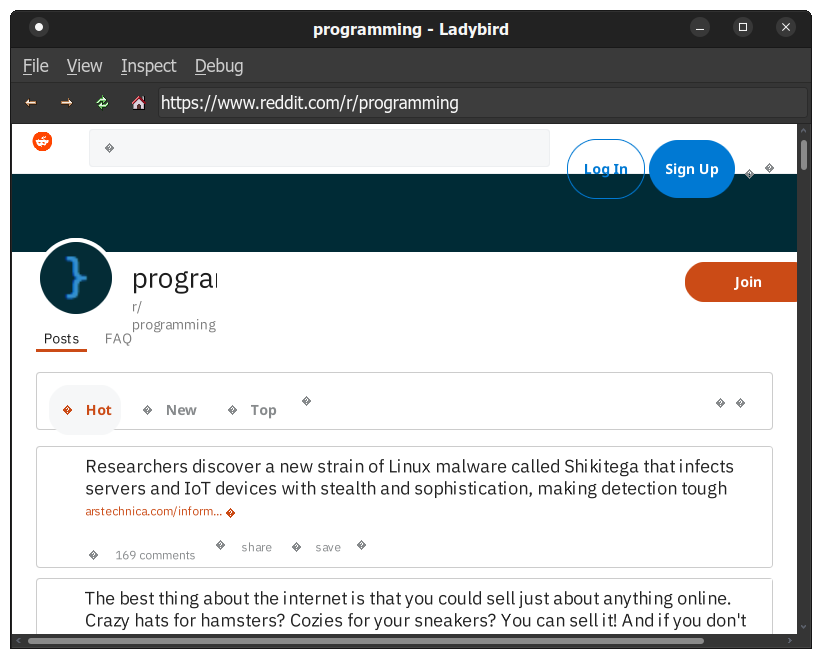
Does Brave have the man-power to sustain their fork if it diverges sufficiently that they can no longer integrate upstream changes?
EDIT: My broader point being, Brave's mission is less compatible with Google's and as such it's unfortunate they aren't basing Brave on Gecko.
I know the whole history with Brendan Eich and Mozilla, as well as the problems with extending and embedding Gecko. Still, seems like an unfortunate outcome