My mother passed away when I was 11, in 1992. My grandfather, who owned property outside of Bristol (UK), planted a forest in her memory and named it “Pam’s Wood”. He said that memories fade but that the forrest would grow higher and thicker as time went by and that even in the far future his daughter’s name would be remembered even though everybody who had ever known her had long passed away.
Wish I could do this near where I live in the UK, but even non-arable land etc. is getting stupidly expensive. Apparently this is a big unresolved issue with the recent drive to plant more trees.
You don't have to own land to plant trees. The Colne Valley Tree Society has planted more than 300 000 since the mid 60s.[0] It has made a big difference to the quality of life in the area.
I think her biggest achievement will be that she's grown a love of the environment in her children and grandchildren. They all sound deeply knowledgeable about the forest, which is much more than treating it as a playground.
I instinctively knew this would be in India, specifically south India. Here’s a similar story where a lady planted and grew 8000 roadside trees https://youtu.be/AHY45HSB-e8
I'm always amazed at people with HUGE backyards and acreage...everything is so manicured. Why? To me it makes no sense, a real forest is very relaxing (Granted they may have a real forest 500yards away)
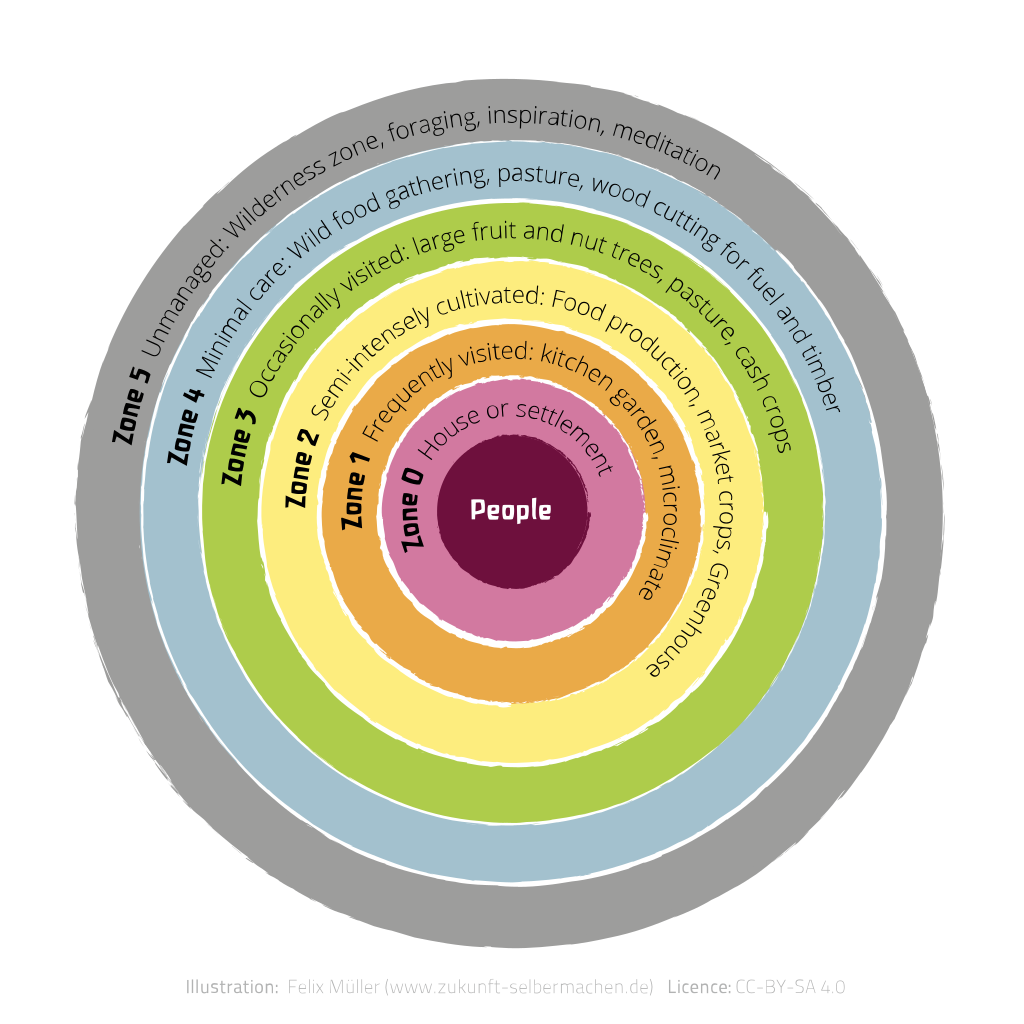
I have a few acres, and tried leaving it all to its own devices, and then decided against that after picking several ticks off my toddler and spouse. Now we have the area immediately around the house mowed, then a sort of intermediate area with vegetable gardens, a further area where we let the grass grow tall so the farmer down the road can mow it for silage, and finally a bunch of saplings beyond that to encourage wildlife and coppice for heating fuel down the road.
I generally agree with your sentiment. Without those ticks we'd just have tall grass even close to the house.
If you haven't, you can try chickens or guinea fowl. Chickens are vastly easier, but I hear guineas are more effective (they were too wild for us and wouldn't return to the barn). Chickens will hunt down bugs in the area. Now that you have a garden, you would need to keep them out else they destroy it.
You need to keep them in your chicken (or similar) coop for several weeks, and then release them periodically during the day for several hours - they'll come back at night.
Then you can basically let them roam, but they're notoriously dumb, and worse, careless parents. Ours would abandon nests & eggs eagerly, and then go play on the road (800 metres away) despite being on the property for several years.
There was no water near where they'd loiter, and, of course, cars.
We did keep them in the barn for several weeks. The first chance they got, they ran for the bushes and never came back. They got picked off by predators over the next week or so. Meanwhile the chickens are happy to go back at night for water and food.
Hens are on the horizon but we only moved here a year ago and added a new human which has kept us pretty busy. This weekend's project is enclosing the garden to keep rabbits out anyway, though.
Tick tubes may help with deer ticks, but when we tried them they had minimal effect on other species (which also carry disease). Nothing we've tried (poultry, tick tubes) controls ticks as well as mowing the areas people will be.
Doing some quick research, it seems tick tubes just contain permethrin treated cotton balls that mice (a tick vector) use for their nests? I've already got some permethrin we used for our outer layers and boots for hiking, seems easy enough to make on my own.
Lawns originated as a display of wealth, showing that you were so wealthy you could afford to have land that wasn't devoted to growing food. This attitude persists, even though the origin is forgotten; the majority of people hanker after displays of status even if they don't consciously understand what they are doing. I don't agree with it (I think lawns are stupid and forests are great) but that's the way it is. To change it would take concerted public education. I believe some US states (Colorado?) have efforts to encourage people to plant native species, for example. When I lived in Australia there were some fairly half-hearted efforts to do the same (though the majority of people still had stupidly wasteful lawns; Australia is mostly desert, it shouldn't look like the UK y'all.)
Shouldn't it shift back now that lawn is the default, similar to fat/thin, pale/tan or oysters as food? It's easy and cheap to have a your yard covered in lawn and use a mower to keep it reasonably groomed, it's expensive to have trees put in.
> Australia is mostly desert, it shouldn't look like the UK y'all.
This is the big problem - lawns kind of make sense if you're trying to be a tiny Capability Brown emulating the English countryside, but outside of the temperate maritime climate they're highly unnatural and have to be kept on life support.
People say this, but I think there's plenty of shared lawns (parks, ovals, etc) for kids to mindlessly play on ... and ... I think that kids possibly get more use out of playing (working) in a productive home garden, with planting, weeding, harvesting, eating etc.
Public space tends to be for people to look at, rarely to interact with. My kids get endless hours of fun out of the garden. If it looked pretty and was nicely planted then they wouldn't.
Not where I live. Grass in public parks is used by kids to play, the parts with decorative flowers are quite small.
And people who have garden with vegetables and fruits really dont want kids to randomly play there - they want the vegetables and fruits to grow and be eaten. But, people with kids and productive garden have part of garden dedicated to kids play - it typically has only low maintenance grass on it.
Fires are a serious concern where we live. It gets dry enough in the summer, and keeping it unmanaged and wild just increases the amount of detritus, dead plants, and other potent kindling.
The lack of old trees that block like is why all those new developments you see are so miserable. You'll be blasting your A/C to keep the house comfortable if you live in a warm climate precisely because there's no big enough trees blocking the light.
Being outside around your house without shade is also miserable in the summer.
Those developments will be livable in 15-20 years when the trees mature. That's why I bought a house in a 25 year old neighborhood with mature trees. Any added maintenance of the trees is worth the shade they provide.
In, or rather around, passive houses they are meant to block light during summer. That's why it's recommended to plant trees that will shelter your house from the sun thus lowering temperature inside (and your cooling energy requirements, if you've got air-con, etc.). During winter they shed their leaves and let the sun in, providing the opposite effect. Of course that's in climate zones that actually have summers and winters. Granted, you don't need entire forest for that.
Naturally, that works for most kinds of houses, not just passive ones. It's just especially important for those, if you want to achieve their stated (very low) energy requirements levels.
When I lived in southern California, shade trees on my house was imperative. When they were trimmed and the shade lost, the inside house temp went up about ten degrees.
Sounds like a lifelong project, but you could do it too! If you have a little land, a healthy forest needs only 100 trees per acre. You can plant a couple of acres in a weekend...
You say 100 trees per acre, but Afforestt says 100 trees per 30 sq meters (0.0074 acre)[0][1]! (This is equivalent to 121,000 per acre.) A mature forest may only need 100 trees per acre, but it may take a much larger density to get it started. You may need the soil shaded to keep the soil and leaf fall moist. You may need the trees to shade eachother. You may need the trees to share resources through their roots. You may need the trees to protect each other from the wind.